Archive for the ‘mUSINGS’ Category

Tune now…clarity sooner

I continually forget the importance of evaluating your game systems immediately as they come online.  This can save you hours or redirection late in a project.  If you do it early enough everyone wins.  You give feedback on your tools , and you gain a deeper understanding of how to tune your game with the systems you have.

Meanwhile, the people who supplied the tools are still close to the systems.  It will be easier for them to make adjustments to the systems.  Better than asking them to make changes 6 months later when the intricacies of the code are not as clear.

This methodology is typically contrary my natural instincts.  I’d much rather have all the proposed systems online.  Then like a puppet master, I tug and pull at different strings until the game get the feel I’m looking for.  This method is not always best given a short schedule and clients who evaluate every step.

Moving forward it is best to keep the vision and heart of the game always within reach, regardless of the state of the development.

Redefinition

I watched a GDC presentation by N’Gai Croal in which he mentioned an article or set of essays called ‘A New Taxonomy of Gamers‘. In this writing, the author Mitch Krpata, expands and redefines the overused terms of ”hardcore” and “casual” gamers. He introduces the idea of skill players and tourists then adds in wholesale players and premium players. These terms are much more descriptive and representative of true gamer behavior and expectations.

Skill players and tourists imply the experience the players wish to have with the game. Skill players are one who play to get good at a game. Achievement hunters, I believe, would fall under this category. Competitive players of games like Street Fighter, Starcraft, or Call of Duty: Modern Warfare.

Tourists, on the other hand, are people who like experience the major bells and whistles of a game. They like to revel in the “back of the box moments”. They play games like Call of Duty for the spectacle of it all. In Grand Theft Auto, they may be the player who likes to run over people with cars and agitate cops without trying to complete the story. They are more apt to participate in the cool moments as opposed to breaking apart the game system and understanding its intricacies.

Wholesale and Premium Players draws attention to the purchasing choices played make. Wholesale players look for value in their dollar. They want a game that gets them more hours per dollars. While Premium players are looking to get more experience in a smaller window of time for more money.

If you read the article you will find my interpretation is a bit broad and somewhat terse, however the subject is still sounds. This interpretation put in perspective why reviews typically down play premium player games. Very rarely will you find a game higly rated that is high on spectacle but low on game length. That will lose points for being “too short” even if the game content is compelling. Reviews are written from the perspective of guiding the readers purchasing dollars. As American consumers, we are greatly concerned with stretching our money to the fullest. Unfortunately this ties our hands as developers.

Our creations are not critiqued on a level playing field. As the article suggests, if we can redefine the types of players we have we can than gives critiques that cater to the appropriate parties. Reviews for skill players who are premium player or tourists who are wholesale players. Any combination we desire. That would be something.

Game Renaissance?

Sometimes I wonder if the number of years I’ve spent in the industry biased my perspective.  Well, I don’t wonder that much, I’m fairly certain it has.  However, I do wonder if this same bias is infecting the more popular fringe developers.

“I find I speak the same language as people who view the industry from an outsiders’ perspective,” says Baiyon.

“In speaking with game designers like this, I increasingly come to the conclusion that it’s vital to be involved in activities… that feel like they’re derived from somewhere outside of the industry. This doesn’t seem to be a popular opinion.”

- Baiyon, artist and composer for Pixel Junk Eden

Baiyon seems to share a similar sentiment expressed by Takahashi.  They seem to be grasping for something new.  A need to express personal voices and do what is of personal interest.  This seems to be manifesting in the Japanese game community and the American indie scene.  Even Mikami has now signed on with ZeniMax because of the independence they offer.  These are signs of people wanting to be unshackled and free to journey to explored territories.  I can relate.

Finding the inspiration…

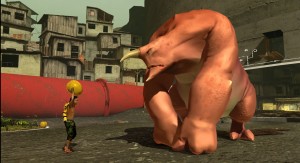
Katamari Wallpaper

Takahashi has never been afraid to speak out against the industry. In the same interview he said “I‘m frustrated with the industry as a whole… I just can’t perceive where the fun is in recent hit video games.”

“I see nothing in them that resonates with me and, their success leaves me feeling confused. The things I find interesting and enjoyable just aren’t reflected in the popular games of today and, I feel like there’s not much room for my voice because of that.”

- Keita Takahashi, creator of Katamari Damacy and Noby Noby Boy

I was able to see Keita Takahashi, creator of Katamari Damacy, speak at GDC after the US release of Katamari Damacy and I believed they were just finishing We Love Katamari.  He was a humble, shy, and humorous fellow.  Shocked by the popularity of the game, he was unclear why so many people had showed up to the talk.   He obviously wasn’t trying to redefine game design.  He was making something that was interesting to him.  Something that was different from the typical game.  I guess that is redefining game design, but I didn’t get the impression that was his goal.
Read more

Comprehension and prophecy

My long time colleague sent this to me in IM the other day.

see, minecraft is exactly why i’ve lost interest in the pc market. not because it’s a bad game, but because it shows that the pc market has evolved beyond my understanding of it.

It gets to the heart of where my design interests lie. I’ve mentioned before I was weened on character action games of the 8bit and 16bit eras. It’s not unreasonable to understand why I don’t run after the social game market or the new indie game creations.

The scene has morphed far beyond my foundational understanding into a larger creature. And each day it looks different from the day before. Like a Borg assimilating new worlds and cultures, it gets stronger as it combines and adapts new concepts and dynamics into it.

I love what is currently being created even if I can’t even fathom the cultural basis that births such concepts. Envy grows inside of me when I try and think like that. However, like most things you have to create from what you know. I can’t do anything else. The games I want to create are becoming more rare on the preservation.

Not because their numbers are dwindling. More species are beginning to procreate on the grounds. Multiplying in startling numbers. It may seem like the ecosystem can’t sustain the change, but mother nature always learns to adapt.

Theme and gameplay or theme vs. gameplay

When I first got into game design, what constituted good game design was a much simpler concept.

Gameplay rules.

The back story and characters were a rough means to an end.  In most cases it didn’t even matter.  Just take the general gameplay and reskin it.  This is best shown in the platform game boom of the 90′s.  Mario spawned it all and proved that backstory didn’t need to be super strong to take players into a new land.

You are a plumber… who needs to save a princess… and you jump on turtles.

What sense does that make?  The gameplay, oh the gameplay, made up for it in spades.   At least the success of Mario made me believe that story wasn’t important.  Gameplay must be king.

Then as we moved forward, story became a bit more integrated into the gameplay.  Sonic was a hedgehog granted with mystical shoes and the gift of speed.  Mega Man was the only good free thinking robot left to stop the rogue robot apocalypse.   Samus must stop the Metroid threat from overtaking the universe.  These games gave credence to the idea that story could enhance solid gameplay.  But still, my belief was amazing gameplay was paramount in making a major hit.

Then there was a coherent meeting of both story and gameplay.  Two games in my memory melded both: Flashback and Metal Gear Solid.  Both amazing products that brought a new level of storytelling and how it can influence and motivate gameplay.  All of a sudden level objectives matched the narrative of the story.  That blew my mind.  And in the case of Metal Gear Solid, the presentation rivaled movie experiences.  A first for games.

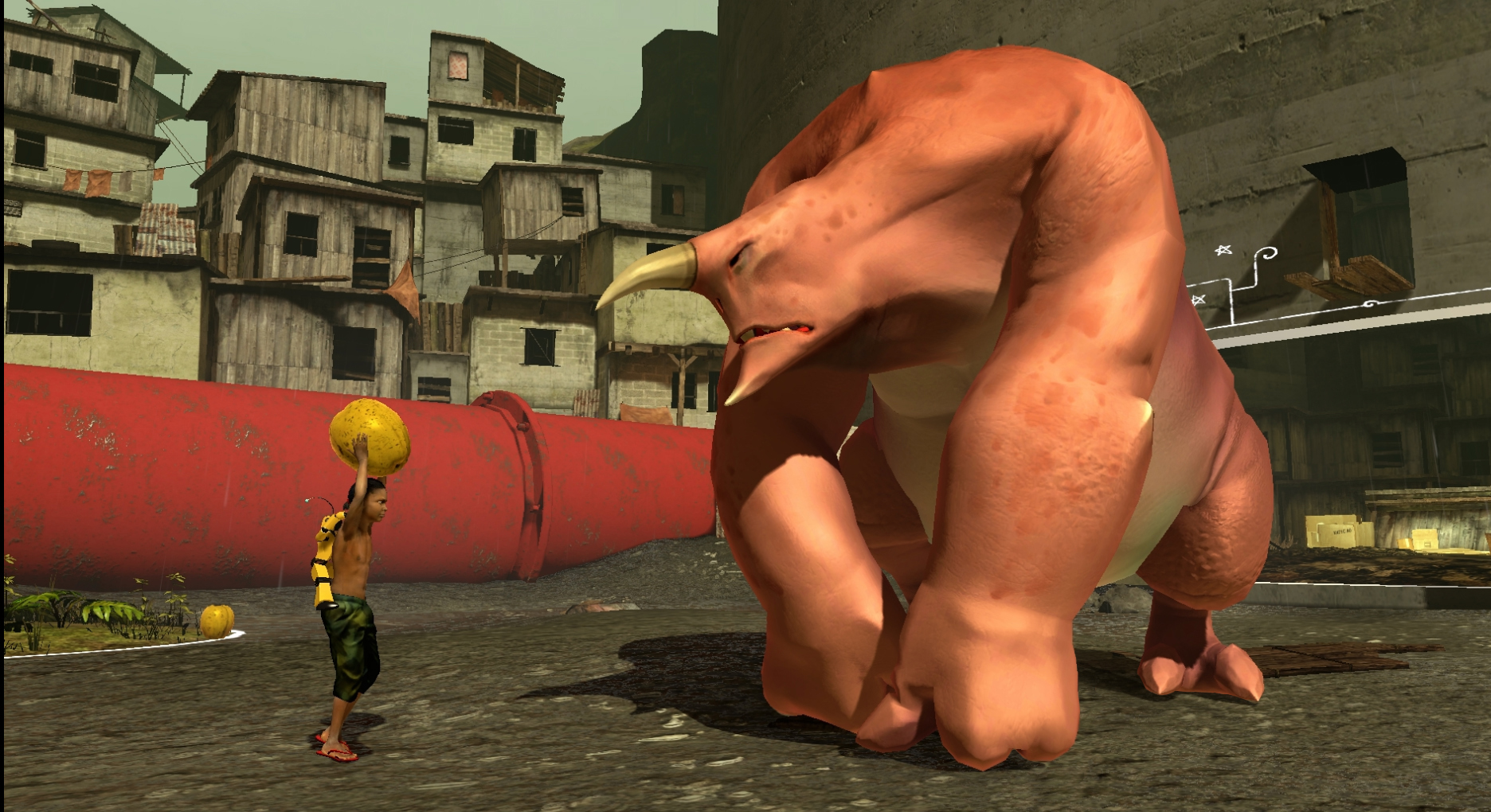
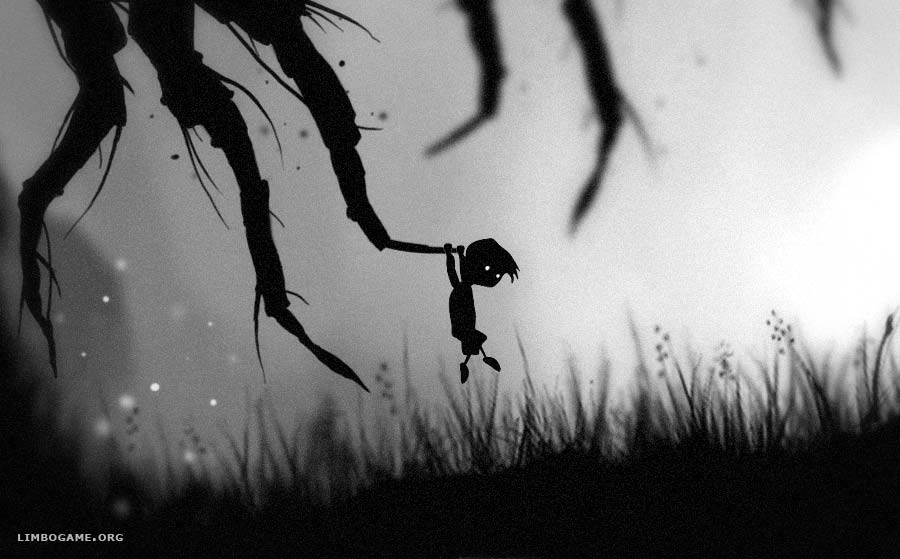
What is most interesting to me, and point of this post, are the recent trend of “art” games.  The ones that jump to mind are Limbo, Shank, and Scott Pilgrim.  All visually stunning games.  However the gameplay of these games may be considered standard.  Passable, but nothing spectacular.  And yet, the press and anticipation for these games were high.

Ask yourself, would Limbo be a great game if it were not for the silhouette presentation?  Would the gameplay by itself be entertaining?  Could you replace the nondescript character with a fuzzy anthropomorphic critter and enjoy the game the same?  Probably not.

Theme is so important to the success of these games.  Which then makes me look back at Mario.  Would Mario still be successful if we changed the main character and all his antagonists?  Probably not.  The eclectic mix of architecture and characters is unique and special to the world of Mario.  Any abstraction would diminish the charm and personality of the universe it has created.

However the art games are heavily steeped in theme.  And gameplay loosely supports the theme.  Not that the gameplay isn’t good, but it isn’t groundbreaking.  It is a means to selling the strong character and the world they live in.  These most recent games just remind me the importance of presentation and belief in the world we present.  We can’t just concentrate on solid gameplay any more.  We must also think of how we present it to the player.

It’s the difference between a short order cook and a gourmet chef.  The former just places meat and potatoes on a plate.  The latter finds a way to adorn the plate as if it was art.  And as a game designer I need to learn how to plate our savory and sweet creations.

Motivation…

Sometimes it’s hard to stay motivated. Hah…let’s be truthful, for some it is extremely difficult. I personally struggle with my motivation everyday. How does this apply to games?

Games don’t make themselves.

One of my favorite sayings. Without motivation how does the game get completed? I struggle with motivation everyday.

Just like a rocket blasting off into space it takes a lot of fuel to get started. With long project cycles it feels like we are forever just trying to break the atmosphere. Burning a minimal amount of fuel, and finding it insufficient for lift off. Ok, I’ve beaten this metaphor into the ground.

How do I combat my lack of motivation? I’ve yet to find a sure fire method. But typically it’s one of the following things that gets me back on track:

  • Break the task into smaller more achievable parts.
  • Reassess the task. Make sure it’s the appropriate focus.
  • Look for inspiration outside of the work.
  • Procrastinate until my mojo comes back.
  • Shut up and do it.

More often than not it’s a combination of the last two that unstick me.  Unfortunately those are the methods that take the longest to execute.  Procrastination is more my style.  And finding the energy to shut up and do it is hard to do most often.  Life and its moment-to-moment events detract from the focus needed for the project’s tasks.  Ultimately, I need to prioritize the project higher in my life priorities.

Well, this weekend the winning motivational method was shut up and do it….with a little bit of change of venue.  I got out and hit a cafe.  While killing time, I reassessed what I needed to do.  I made some real progress this weekend.

Let’s hope I can hold onto that fire.

Marcus

Get up off your couch, but stay in your living room! Part 3

Motion control will most likely be embraced by families and children.  Radio took off because it could be enjoyed passively or actively while accomplishing life tasks.  TV was the introduction of sedentary entertainment.  And video games cemented this trend into status quo.  The Wii’s popularity is the backlash against the couch potato society we have become.  Will the trend followers be able to ride this wave as it crashes against the reef?

Consider the music genre.  Guitar Hero’s popularity rocketed into the stratosphere where it looked like it would maintain a sustainable orbit.  However, others tried to hitch their horse to the trend and cause it to spiral back to Earth.  The market became inundated with numerous Guitar Hero titles and then came Rock Band… and Band Hero… only to be followed by DJ Hero.  Most recently the sales of this genre of games have begun to wane.

People love novelty.  How else can one explain the success of the hula hoop or the rise and fall of the pet rock?  You can see this in the resurgence of 3D movies.  However, unless someone offers something of substance the novelty will wear off.  So far, it seems the majority of Kinect and Move products are copycats and do not offer anything unique or indicative of the platforms individuality.

While this may seem like a bleak picture, it is not all hopeless.  It is certain there will be some developer who makes an application showcasing the best these platforms have to offer.  It will make people see gaming in a new light.  When this occurs the industry will be thrust forward.  At least until the next new interface is introduced.

Get up off your couch, but stay in your living room! Part 2

Obviously, with the popularity the new interface dynamic the Wii provides, the game community recognized the potential for new money.  New players who hadn’t been considered part of the target market poured onto the scene.  Any executive worth his salt would be remiss if they didn’t try and carve out their share of this new market.  And so here come the money chasers.  Let us introduce the Playstation Move and the Microsoft Kinect.

Both, upon first investigation, seem to be very capable devices.  The Playstation Move offers the same, if not more accurate, experience as the Wii. It has a remote control looking device, yet utilizes a camera to sense the glowing light on its end to increase the positional accuracy of the device.  The Kinect is most impressive not requiring the user to hold any apparatus of any kind.  The user must only use their body to interact with the device.

But what is missing from these copycats is the innovation and the creativity that inspired the original idea.  These “me toos” emulate but never capture the true experience of the originator.  To speculate, the Wii’s design and execution was to allow players an easy way to play.  Looking at the flag ship game title for the Wii, Wii Sports, it is easy to see they wanted any and all player to be able to succeed with little to no effort.  It resets perception of the complexity of traditional video games.  The actions themselves are very simple for all to play.

Now with the Move and Kinect we are increasing the complexity and accuracy of the interface yet again.  Is this a good thing?  What is the next step?  VR suits?  VR rooms like the Star Trek holodeck?  At some point when things become “too real” we must then ask ourselves why not take up the real thing?  When your video game ping pong becomes so accurate we can read the top spin and motion of the controller, why not just play real ping pong?

In the end, full body activity isn’t realistic.  Ostensively, people are lazy.  And hard core gamers won’t gesture for hours at a time.  It’s too much activity.  Hard core gamers will play for multiple hours at a time and have been conditioned to relaxing on a couch.

The uncanny valley principle does seem to apply here.  As we approach more accurate motions, we begin to require the tactile feedback of real action.  At some point, one would think it would be more beneficial to take up the actual hobby.  Why play tennis in front of your TV when you can go to an actual court?  Why not take up archery instead of playing the electronic version?

This is the benefit of the lack of fidelity that comes with using the Wii.  Players can “make believe” and extrapolate the missing realities.  The rules of real life can be skewed to benefit the player.  It is easy to just swing your arm with poor accuracy and still see effective action onscreen.  The increase of realism only highlights the challenge of these activities.  With the Move and Kinect it is easy to recognize the shortcomings of the devices.  If the player is less skillful with their swing the results will be less effective.  It is harder to see yourself succeed.  It will take more practice which is at odds with trying to get player’s hooked quickly.

To be continued…

Get up off your couch, but stay in your living room! Part 1

The Wii has brought video games to the masses in a way no other game system has done before.  One could say the Game Boy or the NES was just as note worthy, however, can one really say either of those devices have capture the mind share or attention of popularity that the Wii currently occupies?  The Wii is the new Monopoly or Uno cards.  Everyone knows about it and wants one in their house.  It may not get used highly, but it is there in case someone wants to play.  It’s like having “good china” that is only used when company comes over.

The Wii introduced a new and non-threatening way to play video games.  In the beginning video games were somewhat simple and easy for anyone to play.  As with most things, video games began to evolve with their players.  Players wanted an increased challenge.  To accommodate the industry yielded increased complexity in new controllers and game types. Here we are, years later, well beyond just the single joystick Pac-Man afforded us and miles past the wheel of the game of Pong.  Controllers include several buttons, levers, and tilt sensors.  Game graphics mimic real life far beyond the graphics of Space Invaders.  Games contain multiple meters and scores and counters it is hard for any new person to jump in and immediately understand what is truly going on in the game.

Along comes the Wii.  While still containing multiple buttons, its design resembled something familiar to the uninitiated.  The controller used buttons sparingly and dared players to get up off the couch and use their bodies to interact with the game.  The body actions were simple and easy for players to execute.  It is easy to say swing the controller like a bat.  It is hard to say, pull back stick push if forward rapidly and press the circle button for a boost.  Can you imagine explaining that to someone who has never picked up a video game controller?

The Wii gave a new impression and perception to the world of video games.  Once something enjoyed and understood solely by those “in the know,” the Wii enticed a new sector of people most would have not considered as video game players.  It tapped into the innate desire of all people to play.  Play.  The Wii offers play and acts as a bridge into the world of video games.

To be continued…

Return top